- If you are right handed, you will tend to chew your food on your right side. If you are left handed, you will tend to chew your food on your left side.
- If you stop getting thirsty, you need to drink more water. For when a human body is dehydrated, its thirst mechanism shuts off.
- Chewing gum while peeling onions will keep you from crying.
- Your tongue is germ free only if it is pink. If it is white there is a thin film of bacteria on it.
- The pupil of the eye expands as much as 45 percent when a person looks at something pleasing.
- Laughing lowers levels of stress hormones and strengthens the immune system. Six-year-old's laugh an average of 300 times a day. Adults only laugh 15 to 100 times a day.
- The roar that we hear when we place a seashell next to our ear is not the ocean, but rather the sound of blood surging through the veins in the ear.
- Bats always turn left when exiting a cave.
- The owl is the only bird to drop its upper eyelid to wink. All other birds raise their lower eyelids.
- The reason honey is so easy to digest is that it’s already been digested by a bee.
- Roosters cannot crow if they cannot extend their necks.
- The color blue has a calming effect. It causes the brain to release calming hormones.
- Every time you sneeze some of your brain cells die.
- Your left lung is smaller than your right lung to make room for your heart.
- When you blush, the lining of your stomach also turns red.
- When hippos are upset, their sweat turns red.
- Switching letters is called spoonerism. For example, saying jag of Flapan, instead of flag of Japan.
- The attachment of the human skin to muscles is what causes dimples.
- The sound you hear when you crack your knuckles is actually the sound of nitrogen gas bubbles
- bursting.
- Human hair and fingernails continue to grow after death.
- It takes about 20 seconds for a red blood cell to circle the whole body.
- The only part of the body that has no blood supply is the cornea in the eye. It takes in oxygen directly
- from the air.
- The only 2 animals that can see behind itself without turning its head are the rabbit and the parrot.
- Intelligent people have more zinc and copper in their hair.
- The average person laughs 13 times a day.
- Women blink nearly twice as much as men.
- German Shepherds bite humans more than any other breed of dog.
- Large kangaroos cover more than 30 feet with each jump.
- Whip makes a cracking sound because its tip moves faster than the speed of sound.
- The human heart creates enough pressure while pumping to squirt blood 30 feet!
Showing posts with label Fun Facts. Show all posts
Showing posts with label Fun Facts. Show all posts
Saturday, October 8, 2011
Interesting Facts

Monday, July 18, 2011
Meiosis
This fascinating meiosis video shows how the amazing process works. Watch as the cell prepares as it does for mitosis before the DNA condenses and matching pairs of chromosomes from the mother and father find each other. After trading genes to form hybrid chromosomes, the process continues and unique sets of chromosomes are eventually formed.
Saturday, May 28, 2011
Biology Facts!
People who study biology are known as biologists.
Australia’s Great Barrier Reef is the largest living structure on Earth. Reaching over 2000 kilometres (1240 miles) in length.
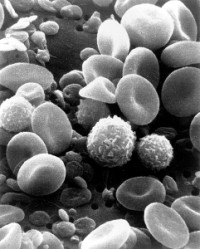 The first person to see a live cell with a microscope was Antonie van Leeuwenhoek, in 1674.
Ecology is the study of ecosystems and how organisms interact with their environment.
While some bacteria can make you sick, others have positive benefits such as helping you digest food or even make yoghurt.
Moulds, yeasts and mushrooms are types of fungus.
The common cold is a type of virus.
Viruses can be treated with antiviral drugs.
Bacteria are extremely small and are made up of just one cell.
Bacterial infections can be treated with antibiotics.
Animals that eat plants as their primary food source are known as herbivores.
Endangered species are those that are in danger of being completely wiped out, they include blue whales, tigers and pandas. Without protection these species may eventually become extinct.
Born on July 5th 1996, Dolly the sheep was the first mammal to be cloned from an adult cell.
When the DNA of an organism changes and results in a new trait (characteristic) it is known as mutation.
French chemist and microbiologist Louis Pasteur was well known for inventing a process to stop various foods and liquids making people sick. Called Pasteurization, it reduces the amount of microorganisms that could lead to disease without having a noticeable effect on taste and quality in a way which methods such as sterilization might.
Charles Darwin developed the idea of natural selection, sometimes called survival of the fittest. It is a process that involves living things with favorable traits being more likely to reproduce, passing on their favorable traits to future generations.
Australia’s Great Barrier Reef is the largest living structure on Earth. Reaching over 2000 kilometres (1240 miles) in length.
The first person to see a live cell with a microscope was Antonie van Leeuwenhoek, in 1674.Ecology is the study of ecosystems and how organisms interact with their environment.
While some bacteria can make you sick, others have positive benefits such as helping you digest food or even make yoghurt.
Moulds, yeasts and mushrooms are types of fungus.
The common cold is a type of virus.
Viruses can be treated with antiviral drugs.
Bacteria are extremely small and are made up of just one cell.
Bacterial infections can be treated with antibiotics.
Animals that eat plants as their primary food source are known as herbivores.
Endangered species are those that are in danger of being completely wiped out, they include blue whales, tigers and pandas. Without protection these species may eventually become extinct.
Born on July 5th 1996, Dolly the sheep was the first mammal to be cloned from an adult cell.
When the DNA of an organism changes and results in a new trait (characteristic) it is known as mutation.
French chemist and microbiologist Louis Pasteur was well known for inventing a process to stop various foods and liquids making people sick. Called Pasteurization, it reduces the amount of microorganisms that could lead to disease without having a noticeable effect on taste and quality in a way which methods such as sterilization might.
Charles Darwin developed the idea of natural selection, sometimes called survival of the fittest. It is a process that involves living things with favorable traits being more likely to reproduce, passing on their favorable traits to future generations.
Monday, April 11, 2011
Space Facts!
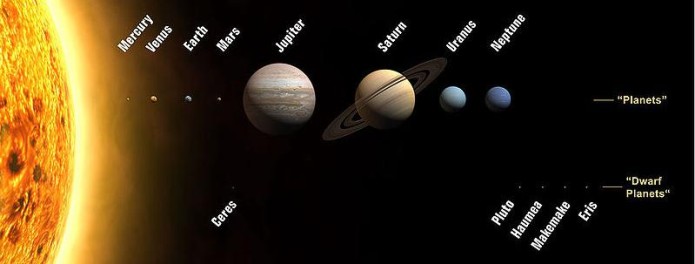
The Sun is a star found at the center of the Solar System.
It makes up around 99.86% of the Solar System’s mass.
At around 1,392,000 kilometres (865,000 miles) wide, the Sun’s diameter is about 110 times wider than Earth’s.
Around 74% of the Sun’s mass is made up of hydrogen. Helium makes up around 24% while heavier elements such as oxygen, carbon, iron and neon make up the remaining percentage.
Light from the Sun reaches Earth in around 8 minutes.
The Sun’s surface temperature is around 5500 degrees Celsius (9941 degrees Fahrenheit), so pack plenty of sunscreen if you plan on visiting (remembering that the average distance from the Sun to the Earth is around 150 million kilometers).
The Sun’s core is around 13600000 degrees Celsius!
The Sun generates huge amounts of energy by combining hydrogen nuclei into helium. This process is called nuclear fusion.
 Because of the Sun’s huge influence on Earth, many early cultures saw the Sun as a deity or god. For example, Ancient Egyptians had a sun god called Ra while in Aztec mythology there is a sun god named Tonatiuh.
The Sun produces a solar wind which contains charged particles such as electrons and protons. They escape the Sun’s intense gravity because of their high kinetic energy and the high temperature of the Sun’s corona (a type of plasma atmosphere that extends into space).
Planets with strong magnetic fields such as Earth manage to deflect most of these charged particles as they approach.
A solar eclipse occurs when the Moon is between the Sun and the Earth.
While we usually think of the Earth’s Moon there are many other moons in the Solar System.
As of 2009, there were 336 moons in the Solar System. 168 of these orbit planets, 6 orbit dwarf planets, while the rest orbit asteroids and other Solar System objects (many yet to be classified).
Jupiter’s four main moons are named the Galilean moons (after Galileo Galilei). Their names are Io, Europa, Ganymede and Callisto.
Io features over 400 active volcanoes.
Some scientists believe that water could exist below the surface of Europa.
Ganymede is the largest moon in the Solar System.
Callisto has a similar diameter to the planet Mercury but only one third of its mass.

Saturn’s largest moon is named Titan, it is the only moon known to have a dense atmosphere.
Neptune’s largest moon, Triton, is similar in size to Earth’s moon. Discovered in 1846 it is the seventh largest moon in the Solar System.
The largest moon of the dwarf planet Pluto is named Charon, it was discovered in 1978 and has a diameter that is around half as wide as Pluto’s.
Mars has two moons named Phobos and Deimos, both were discovered in 1877.
Venus and Mercury have no moons.
Wednesday, March 2, 2011
Math Facts!
Facts about the golden ratio, pi, geometry, prime numbers, amazing numbers that are so big it’s hard to even understand them and so much more! Read on and have fun learning about math.

Mathematics is important in many different types of jobs, including engineering, business, science, medicine and more.
It is believed that Ancient Egyptians used complex mathematics such as algebra, arithmetic and geometry as far back as 3000 BC.
It wasn’t until the 16th century that most mathematical symbols were invented. Before this time math equations were written in words, making it very time consuming.
What comes after a million, billion and trillion? Why a quadrillion, quintillion, sextillion, septillion, octillion and nonillion of course.
Cutting a cake into 8 pieces is possible with just 3 slices, can you work out how?
An icosagon is a shape with 20 sides.
A three dimensional parallelogram is called a parallelpiped.
Trigonometry is the study of the relationship between the angles of triangles and their sides.
The smallest ten prime numbers are: 2, 3, 5, 7, 11, 13, 17, 19, 23, 29.
The name of the popular search engine ‘Google’ came from a misspelling of the word ‘googol’, which is a very, very large number (the number one followed by one hundred zeros to be exact).
A ‘googolplex’ is the number 1 followed by a googol zeros, this number is so big that it can’t be written because there isn’t enough room in the universe to fit it in! It would also take a length of time far greater than the age of the universe just to write the numbers.
The number pi (the ratio of the circumference to the diameter of a circle) can’t be expressed as a fraction, this means it is an irrational number. When written as a decimal it never repeats and never ends.
Here is pi written to 50 decimal places: 3.14159265358979323846264338327950288419716939937510
 If two quantities have a ratio of approximately 1.618, they are said to be in the golden ratio. This ratio has been used throughout history to design aesthetically pleasing art works such as the Parthenon. It also appears in paintings, music, the design of books, and even in nature.
Mathematics is important in many different types of jobs, including engineering, business, science, medicine and more.
It is believed that Ancient Egyptians used complex mathematics such as algebra, arithmetic and geometry as far back as 3000 BC.
It wasn’t until the 16th century that most mathematical symbols were invented. Before this time math equations were written in words, making it very time consuming.
What comes after a million, billion and trillion? Why a quadrillion, quintillion, sextillion, septillion, octillion and nonillion of course.
Cutting a cake into 8 pieces is possible with just 3 slices, can you work out how?
An icosagon is a shape with 20 sides.
A three dimensional parallelogram is called a parallelpiped.
Trigonometry is the study of the relationship between the angles of triangles and their sides.
The smallest ten prime numbers are: 2, 3, 5, 7, 11, 13, 17, 19, 23, 29.
The name of the popular search engine ‘Google’ came from a misspelling of the word ‘googol’, which is a very, very large number (the number one followed by one hundred zeros to be exact).
A ‘googolplex’ is the number 1 followed by a googol zeros, this number is so big that it can’t be written because there isn’t enough room in the universe to fit it in! It would also take a length of time far greater than the age of the universe just to write the numbers.
The number pi (the ratio of the circumference to the diameter of a circle) can’t be expressed as a fraction, this means it is an irrational number. When written as a decimal it never repeats and never ends.
Here is pi written to 50 decimal places: 3.14159265358979323846264338327950288419716939937510
If two quantities have a ratio of approximately 1.618, they are said to be in the golden ratio. This ratio has been used throughout history to design aesthetically pleasing art works such as the Parthenon. It also appears in paintings, music, the design of books, and even in nature.Amazing Science Facts

Turritopsis nutricula is a genus of jelly fish which is also regarded as the immortal jelly fish. This is due to the fact these species have the ability to transform themselves back into juvenile form once they mate after becoming sexually mature.
One of the must-know weird science facts is about the planet Saturn. It has a density that is lower than that of water. So, if you could throw it in the ocean, it would actually float!
Every year, the average person is known to have 430 bugs as dinner, lunch or breakfast.
Some chameleons have tongues which are longer than their body.
In a school of clown fish, if the female dies, then the dominant male would become a female to continue with the reproduction process.

Every year, falling coconuts are known to kill people more in numbers than sharks do.
A boat made of Black Ironwood would never float on water. This wood is the world's densest of its kind and so it would sink.
Liver is the only organ which has the capability of regenerating itself.
The planet Mercury has a day that is twice as long as its year.
The Pyramid of Giza is the result of a accumulation of 2.5 million blocks.

Farting constantly for a period of 6 years and 9 months would produce an amount of energy that would be enough to create that of an atomic bomb.
The stomach would have digested itself if it lacked the lining of mucus.
Pumice is the only known rock which can float on water.
300 beats per minute is the pulse of a hedgehog

A blue whale's tongue is as heavy as an adult elephant and even bigger than a taxi cab.
Buy an electric eel found in South America and reduce your electricity bills. This creature can produce 600 volts; voltage enough to paralyze a horse.
Subscribe to:
Posts (Atom)